Top Signs You Need Garage Door Service – Don’t Ignore These
Most garage door failures don’t happen without warning. A door that takes three seconds longer to open than it did six months ago isn’t “just getting old” – it’s telling you the spring tension is off, and the opener motor is compensating by overworking itself. A door that slams down instead of settling softly is saying the same thing. The gap between those first signals and a door that stops mid-descent is exactly when a repair is cheapest and least disruptive, and it’s the window most homeowners miss. If you’d rather not sort through the symptoms yourself, call (855) 337-2081 and we’ll help you read the signs.
Listen First: What Each Garage Door Sound Is Telling You
Garage doors are quiet machines when everything is in balance. Any noise beyond a low, steady hum is a clue, and the type of noise narrows down the cause fast. Homeowners in Dakota Ridge often describe a new sound as “just wear,” but each one points somewhere specific.
- Grinding: Metal-on-metal contact, usually from dry or worn rollers, a misaligned track, or a torsion tube that’s shifting. Grinding rarely fixes itself and tends to spread wear to the opener.
- Squealing: Often the rollers or hinges running dry, or a roller that’s seized and dragging instead of rolling. On belt-drive openers, a squeal can also come from the motor itself.
- Popping: This one deserves attention. A single loud pop can mean a torsion spring has snapped, or a cable has jumped its drum. Stop operating the door and have it looked at.
- Rattling: Loose hinges, brackets, or window inserts. Sometimes minor, but rattling that gets louder over a few weeks usually means fasteners are backing out.
- Banging or slamming: The door is dropping the last stretch instead of easing down. That’s a spring or tension problem, and the opener is absorbing forces it wasn’t built to handle.
One thing worth repeating: spraying everything with lubricant isn’t a diagnosis. It can quiet a symptom while the real cause – a worn cable, an off-tension spring – keeps getting worse underneath. We’ve seen enough doors in Dakota Ridge to know the difference between a noise that needs grease and a noise that needs a part.
The 90-Second Speed and Symmetry Check
You can catch most mechanical imbalance before it becomes a broken component, and it takes less time than brewing coffee. Run this check once a month or anytime the door sounds or moves differently. It’s the single most useful habit we can teach a homeowner.
- Time it. Note how many seconds the door takes to open and to close. Compare it to a month ago. A gradual slowdown points to spring tension loss or a straining opener.
- Watch the gap at the bottom. With the door closed, look at the space between the bottom seal and the floor. A gap that’s wider on one side means the door is unbalanced.
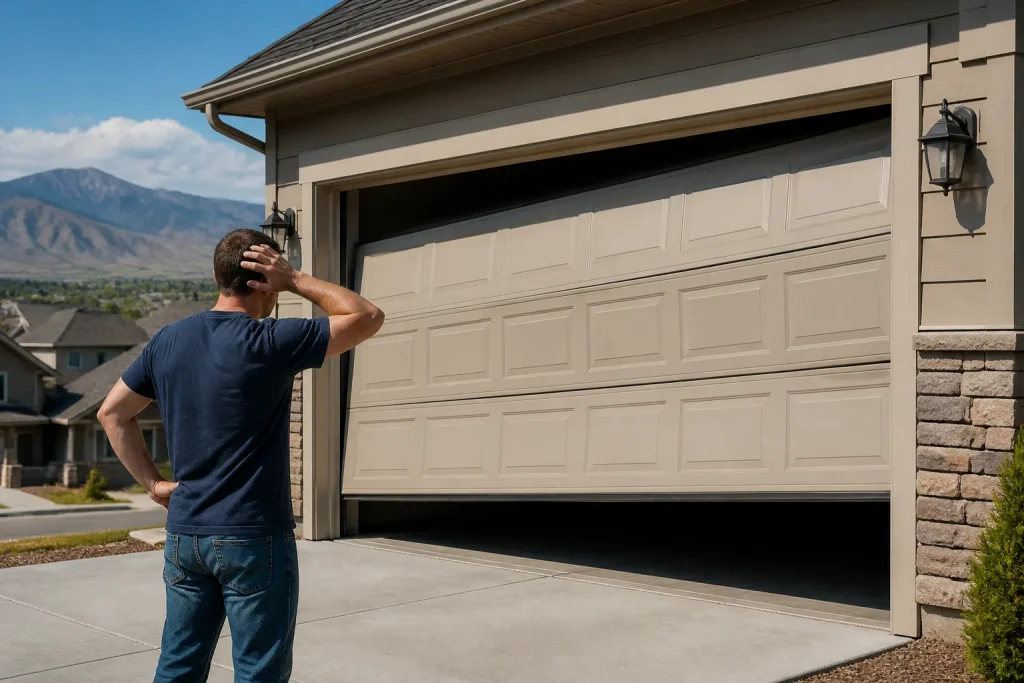
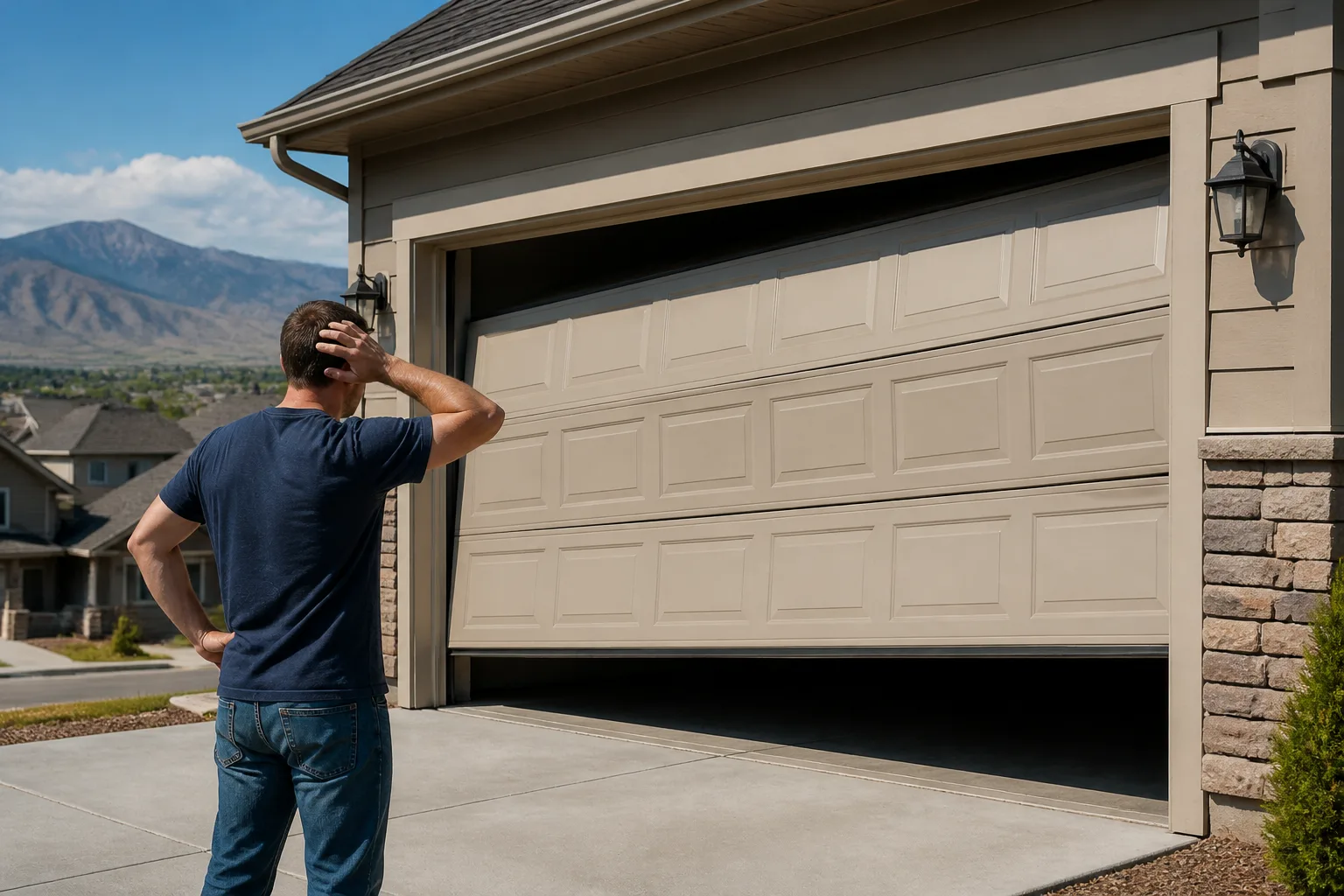
- Check the sides moving up. During travel, the door should rise evenly on both sides. If one side lags, you likely have a cable or spring imbalance – and cables under tension are not a DIY item.
- Listen for the finish. The door should meet the floor with a soft, controlled stop. A hard landing means the spring is no longer doing its share of the lifting.
These four checks won’t tell you which part to replace, but they’ll tell you whether something is off. That’s enough to make a smart call. If the door fails any of them, it’s a good moment to look into garage door repair before a small imbalance turns into a snapped component.
When the Door Reverses Before It Hits the Floor
A door that goes back up before touching down is sending a clear message: the safety system or the force limit is out of adjustment. This is one of the most common calls we get in Dakota Ridge, and it’s also one of the most predictable problems to worsen. The door isn’t being dramatic – it’s following its programming to the letter.
Two things usually cause it. The first is the photo-eye sensors mounted near the floor. If they’re knocked out of alignment, dusty, or blocked by a stray leaf or a stored box, the door reads an obstruction and reverses. The second is the opener’s force limit, which tells the motor how much resistance to push through before giving up. As springs weaken, the motor meets more resistance, and the force limit trips earlier and earlier. Left alone, an opener compensating for a tired spring will eventually overheat its motor or strip a gear.
What you can safely do: confirm the sensors are aligned and their lenses are clean, check that nothing sits in their path, and make sure the manual release hasn’t been pulled. What you shouldn’t do is crank up the force setting to force the door through. That defeats a safety feature and masks the real problem. If cleaning and aligning the sensors doesn’t solve it, the issue is mechanical or in the opener logic, and it’s time for a trained set of eyes. Whether it’s a LiftMaster, a Chamberlain, or a Craftsman unit, the diagnostic path is similar – and it’s one of the reasons we treat garage door opener repair as its own specialty rather than a vague add-on.
The Visual Inspections Most Homeowners Skip
Some of the clearest warnings are things you can see without touching a moving part. A quick visual pass, done with the door closed and the opener unplugged, catches most of them. We recommend looking for four specific things.
- Frayed or worn cable strands. Look at the cables running along the sides. A healthy cable is smooth and even. Frayed strands or a fuzzy appearance mean the cable is failing, and a snapped cable can whip with real force. Do not touch it – call a professional.
- Rust on the springs. A little surface rust is normal in a Colorado climate with big temperature swings. Deep pitting or a rusty, uneven look on a torsion spring means it’s closer to failure than it looks.
- Bent or gaping track sections. Stand back and sight down the vertical tracks. A bend, a dent, or a section that’s pulled away from the frame will force rollers to bind – and a door that binds strains everything else.
- Sagging panels or a crooked bottom edge. Uneven panels put extra load on the whole system. On doors from Wayne Dalton, Clopay, or Amarr, panel alignment issues are usually fixable before they affect the rest of the hardware.
Visual cues are where the cheap fix lives. Catching a frayed cable before it breaks, or a bent track before it eats a set of rollers, keeps a small repair from turning into a bigger one.
Dakota Ridge Seasonal Signals: What Fall and Winter Change
Garage doors here work in a climate with wide swings between summer heat and winter cold, and those swings show up in the hardware. When temperatures drop, steel contracts, and the torsion spring that lifted smoothly in August has less give in it. Brittle springs are more likely to snap – and they tend to do it during the first cold snaps of the season, often in the early morning when the door is first used.
Track contraction is the other seasonal signal. As the metal tracks cool and shorten slightly, gaps can open at joints and rollers can start to bind. You may notice the door feeling stiffer or noisier on cold mornings, then smoother again once it warms up. That pattern is a real clue that the hardware is under seasonal stress, not a coincidence.
So what’s worth watching in fall around Dakota Ridge? Pay attention to a door that suddenly becomes louder or slower on the first cold mornings, a spring that looks duller or more pitted than it did in spring, and any new popping or grinding. Those are the weeks when a scheduled tune-up is far easier than an emergency repair. Fall is also a sensible time to look at a door that’s needed attention for a while – if a door is past the point where repair makes sense, that’s a good moment to plan garage door repair versus replacement with a clear head, rather than in a hurry when it fails.
When to Call a Pro (and When It Can Wait)
Some noises are a lubrication-and-adjustment job; others are genuinely dangerous to touch. The line between them is worth knowing.
Call us right away if: a spring has visibly snapped, the door hangs unevenly or one side drops, a cable looks frayed or has come loose, the door reverses on its own and sensor cleaning doesn’t fix it, or the door is stuck open or closed. These involve high-tension parts that store enormous energy. Torsion and extension springs are among the most dangerous components in a home, and a DIY approach to a spring or cable is how serious injuries happen. That’s why spring work is a dedicated, safety-critical service we handle with trained technicians, not a quick homeowner fix.
It can wait a little if: the door simply runs louder than it used to, a hinge squeaks, or you’ve noticed a small gap at the bottom with no other symptoms. Book a repair before the little issue grows up.
A trained technician checks the door the way a mechanic checks a car – springs, cables, rollers, hinges, track alignment, and the opener – so the actual problem gets fixed, not just the symptom. Our technicians have up to 9 years of experience across the major brands, from Genie openers to Amarr doors, so the diagnosis fits the system in front of them.
Related services in Dakota Ridge: If a worn spring is behind the noise, that’s garage door spring repair territory. If the opener is the weak link, that falls under garage door opener repair. And when the symptoms point to a full replacement, we handle new installation too – so you never need to call a second company as things change. For the full picture of what we do, visit Garage Door Repair Dakota Ridge.
The Bottom Line
Your garage door tells you what’s wrong long before it quits – through sound, speed, symmetry, and the visual details you walk past every day. Learn to read those signals and you’ll trade a mid-descent failure for a scheduled fix, which is cheaper, faster, and a lot less stressful.
The short list to remember: grinding, squealing, popping, and rattling each point somewhere specific; a door that slows down or lands hard has a tension problem; a door that reverses needs its sensors or force limit checked; and frayed cables, rusty springs, and bent tracks should never be ignored. When in doubt, stop operating the door and get it looked at.
If you’re in Dakota Ridge and need help, Garage Door Repair Dakota Ridge offers free estimates – call (855) 337-2081. Emergency service is available when a door simply can’t wait, and every price is quoted and agreed before any work starts.
Frequently Asked Questions
The earliest signs are usually a change in sound or speed – grinding, squealing, popping, or a door that takes noticeably longer to open than it used to. Any of these means something is out of balance or wearing. Call (855) 337-2081 and we’ll help you figure out what’s going on.
It can be. A single loud pop often means a torsion spring has snapped or a cable has jumped. Springs and cables store enormous energy, so it’s not a part to inspect by hand. Stop using the door and have a trained technician take a look. Call (855) 337-2081 to get it checked.
Usually the photo-eye sensors are misaligned or blocked, or the opener’s force limit is tripping because the springs have weakened. Start by cleaning and aligning the sensors; if that doesn’t fix it, the cause is mechanical or in the opener. Call (855) 337-2081 and we’ll diagnose it.
Lubrication helps with squeaks and dry rollers, but it won’t fix grinding from a misaligned track, a frayed cable, or a failing spring. Treat lubricant as maintenance, not a repair. If the noise persists, call (855) 337-2081 for a real diagnosis.
Written by the team at Garage Door Repair Dakota Ridge.
Need Garage Door Help?
Call Garage Door Repair Dakota Ridge - the local pro we connect you with is licensed and insured, here with fast after-hours help in Dakota Ridge.
(855) 337-2081